In Print
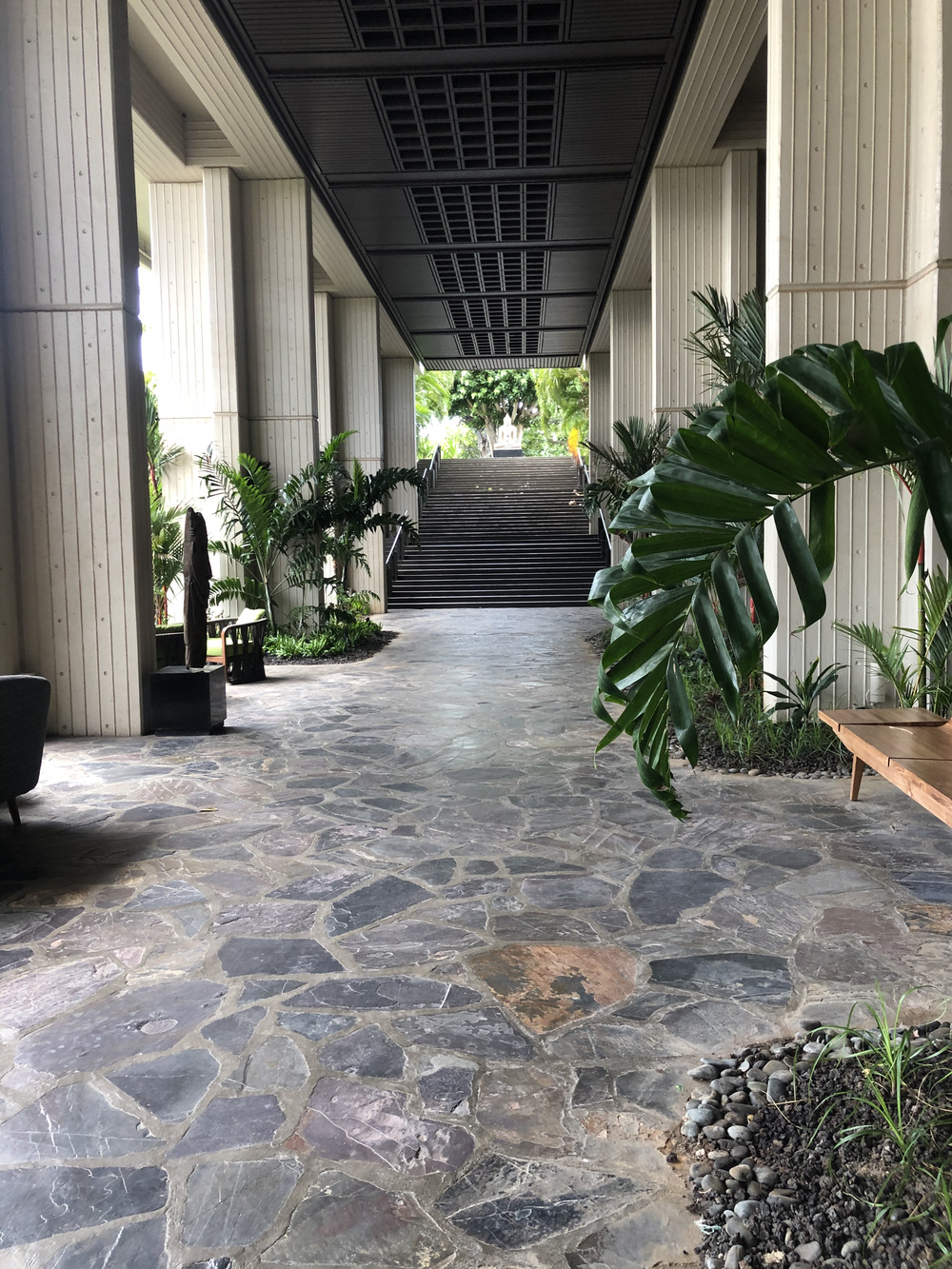
A Refined And Somewhat Edited Space: The Completed Form Should Be The Architect’s First Vision. Mauna Kea Resort, A Rockefeller Property, Big Island, Hawaii
Editing
A Book on the Relationships Between The Editing of Mental Productions, Behavior, and Morality
Book and Journal of Mattanaw
Book I, §iii, Draft
Publisher: PlaynText, Tempe, Arizona
Publisher
Copyright © 1984 to Present by Mattanaw. All Rights Reserved.
Publisher: PlaynText Location: Tempe, Arizona
PlaynText is dedicated to the publication of high quality journal publications issued in premium book format, as book/journal hybrids. Each publication is intended to be an illustration, potentially, of the maximum and least-inhibited use of free thought and free expression.
Copying, distributing, plagiarising, processing, storing, and serving the contents of this book is a violation of intellectual property, unless otherwise indicated by the copyright holder elsewhere, as it relates to this specific issue of the Book and Journal of Mattanaw. For permission to use any contents of this book, please contact the author at http://mattanaw.org/com.html.
Published by PlainText/PlaynText, Inc, companies wholly owned by the author, Mattanaw, Mattanaw, (formerly “Christopher Matthew Cavanaugh”). Mattanaw is a legal name and not a pseudonym. While owned by Mattanaw, the Book and Journal is published by PlainText/Playntext, a large organization, comprised of many contributors, at a substantial investment. It is not self-published.
Printed in Tempe, Arizona, in the United States of America.
Published and printed by PlaynText, an imprint of PlaynText, Inc.
The Publisher is not responsible for the content of others produced on websites, applications, social media platforms, or information related storage or AI systems. The processing of this Book and Journal by an AI System is prohibited.
Library of Congress Control Number (pending)
Library of Congress ISSNs: 2998-713X (Online), 2998-7121 (Print)
Academics and Peer Review
The Book and Journal of Mattanaw is an Academic Journal having a comprehensive peer review process to produce high quality scholarly articles. This peer review process is more and not less advanced than the peer review process of other major scholarly journals.
Several rounds of peer review are conducted for each issue, by a number of external academics and industry professionals, using the double-blind approach and other methodologies, before a book issue is released.
The process is well defined, scholarly, better than industry standard, and partly proprietary due to the innovativeness of the approach. However, parts of the confidential approach are standardized, and therefore already know to the public. The smaller interior peer review process is an open and transparent process that can be reviewed by the readership and members of the public, for inquiry and comment. The remainder is temporarily proprietary and confidential.
This process is more stringent and more open than many similar peer review processes due by our additional process expertise typically not existing with other publishing companies. Publishing companies often do not have experience in business process, software process, and other organizational workflows. This organization has expertise in this domain that is consummate by comparison to what is available at other publishers, and it may be the case, that such publisher’s would rely on the expertise of this organization. The peer review process utilizes a standard double-blind peer review but this is merely incorporated into the larger process which has greater complexity, and methodical sophistications missed by other approaches. Therefore it is an enlarged peer review process of higher quality. The peer-review process itself is also subject to periodic improvement, quality testing, and scientific debugging and examination.
The total review process, that is inclusive of peer review, has a very high requirement for making revisions for final release in book-issue form, and drafts are rejected continuously until they reach a level of quality needed. Once they reach the quality required, if ever, they are accepted. The rejection rate is greater than with a standard academic journal at greater than 99 percent.
To be as transparent as possible, the total review process includes also public review of all materials in a draft state. Instead of hiding materials and keeping them unpublished until finally getting through a gate-keeping system, that finally publishes a “finished” document, showing nothing of idea development and editorial refinement, this journal shows all the advancements from early document drafts exhibited within bare almost template-like documents, through to the review process, until release in book-issue form. At all stages from the initial ideation to the initial document and web/print publication, the public is permitted full visibility into the process. It is an open process, as is expected by science, and not a closed process like business journals, sometimes called “academic or scholarly” journals.
The articles produced by the Book and Journal are not constrained to a specific audience, but instead uses a more inclusive, less discriminative approach, more flexibly communicative, while maintaining within a more sophisticated presentation, the expected presentability of academic readers and scholars. The content however, is not expected to be entirely unreachable and inaccessible to public audiences that are given access to the reading materials. This may be contrasted with a non-inclusive peer review system, that is discriminatory and exclusive of readers forcing submitters to prepare works for release in for-pay only retrieval systems.
In some cases, book issues have content that was syndicated to other Journals, meaning in addition to the process used by this journal, content has also been peer reviewed by the editorship, boards, or peer review staff of other journals. This makes the peer-review process of content for this journal especially stringent, and of course, if published elsewhere, it was deemed of good quality by one or more additional organizations.
Those texts that are transparently in a draft state for readers to see development in progress have not yet entered the peer review process, but enter the process at the time they go into post-draft, print issue candidacy. Once the candidate issue is approved, it is released as a standard book issue. All those texts marked with numberings, for book, issue, edition, and not only “draft” are those that have undergone the peer review process.
Additional questions for those interested in the peer review process can using the communications form in Communications.
Author
The Author and Editor-in-Chief, by his enterprise client’s headquarters in San Diego, California
Artist/Author: The Honorable Dr.9 Mattanaw, Christopher Matthew Cavanaugh, Retired
Interdisciplinarian with Immeasurable Intelligence. Lifetime Member of the High Intelligence Community.6
- Masters Business & Economics, Harvard University, Studies Completed
- Attorney, Pro Se, Litigation, Trial, Depositions, Contracts (E.g. State of Alaska v. Pugh, et. al., Alaska Superior and Supreme Courts)4
- B.S. Psychology, University of Maryland, 4.0, Summa Cum Laude1
- B.S. Computer & Information Science, University of Maryland, 3.91, Magna Cum Laude2
- B.A. Philosophy, University of Maryland.3
- G.E.D., State of Maryland, Montgomery County, 1999.
- Lifetime Member of the High Intelligence Community, Mensa Lifetime Member
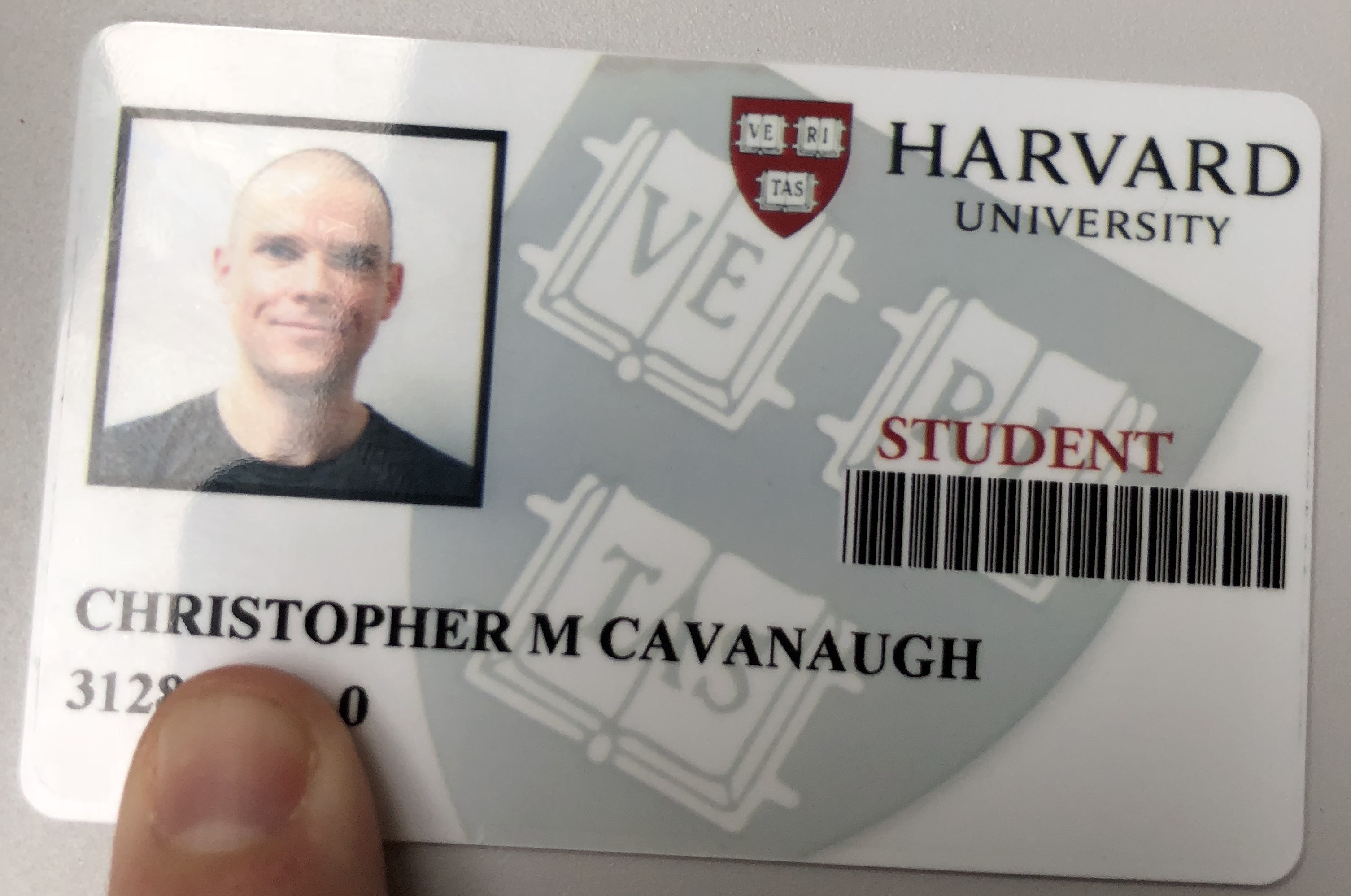
Former Chief Architect, Adobe Systems
Current President/Advisor, Social Architects and Economists International.
CEO PlaynText | CEO PlainText
Contact:
Resumé
Contents
- Academics and Peer Review
- Author
- Copyright
- Edit History
- Acknowledgements
- Preface
- Introduction
- Writing and Artifacts or Primary Sources
- Writing at Maximum Typing Skill and Communication Throughput
- Writing and Intelligence
- Balancing Editing Propensities With Avoidance of Obsessiveness, Erring Typically Towards Editing
- Transparency in Immediate Publishing and Live Drafts
- Conclusion
- Notes
Edit History
- 773 Wanattomians, Epoch 1789272285, Saturday, September 12, 2026
21:04:45, United States of America
- Updated contents and prep to add diagram process into section about academics and peer review.
- 526 Wanattomians, Epoch 1767946314, Friday, January 09, 2026 01:11:54, United States of America
- Updated: Friday, February 17th, 2023, at 6:26 PM Waitara, New Zealand Time
- Draft Created: Sunday, September 11th, 2022, at 1:21 PM Las Vegas Time
Introduction
This entire website is an experimental exercise in editing. Some portions of the site are nearly entirely unedited, not out of any unconcern for the readers experience, but to share interesting information about thinking and the writing process, and for collecting data related to intelligence and other effects of non-edits. Some of these writings that are not edited have been timed. If one wants to understand quality of writing and thinking in relation to time, it must be unedited and it must be timed. Time to arrive at a final product after editing steps could also be timed, but while this is of some interest, historically it was not as interesting to the author as what comes naturally from the mind without retouching, first.
It may be that most who work on journal writing for personal purposes encounter a dilemma between wanting to have really high quality polished recordings, and having recordings that are closer to thoughts. If one wrote a journal, but spent time editing each and every entry, until it was polished enough to please the writers mind at later times, then they would be unable to see clearly how they thought previously, if they became curious about that. When examining artifacts from oneself or one’s family members, one would hope to get a recollection or glimpse of who they were at that time really. Natural videos of events go unedited and convey what people were really like and how they spoke. Writings that are heavily edited for social worries about how they will be judged later will not convey the same kind of information and arguably, is not as valuable for an archaeological study of one’s own life.
Other portions of this site are heavily edited for being intended to represent more committal thoughts and theses in an academic or magazine article format. This site is also a comprehensive journal and book, with sections that are more frequently revisited and edited with the objective of adding more material, and getting various arguments and observations and descriptions correct. Correctness is what is desired on this website, but the type of correctness is in view to the author, and correctness of artifact is very different than correctness in conformity to grammatical standards, or standards for composing academic articles with references and citations.
The objective of this page, other than to briefly convey what to expect regarding lack of edits and spelling correction in some places, is to reveal the results of self-observation and scientific findings regarding audience reactions about editing, and about the relationship between writing and intelligence, creativity, and virtuosity of typing and writing skill. There are many interesting findings that can be had in such a study–for example:
“How far is it possible to go in writing without error, typing and not looking at a keypad?”
I have findings related to this, and also:
“To what extent are people tolerant of small mistakes in writing versus their tolerance of small mistakes in speech as they listen to you?
to which I can say, many are extremely intolerant about writing with errors, but are highly tolerant in oral communication. Probably even where what is discussed is highly similar. However, some are uniquely tolerant and will read through writings to find things of value, which indicates perhaps other factors like better reading ability or ability to see value through distractions.
Future sections will discuss findings in detail on a wide range of topics, and I think much that is here is very unique and different from what is taught in school, and covers a wider range of questions that a writer might have about the editing process, than is traditionally expected. Unlike other sections of the site, this page will be well edited to ensure material is correct and all is as accurate as it can be, for the time and iterations the author has had to edit. Editing is never finished.
Writing and Artifacts or Primary Sources
In the field of history a primary source document is considered one that is especially reliable as an piece of data about what has happened. History is related to archaeology in that the researcher has to rely upon data and pieces of information in order to piece together or build a reasonable picture of what may have occurred in the past. Any piece of writing that is old, is a kind of artifact, but it’s closeness to original events, or original documents, versus copies and so on, influences its credibility and authenticity, and value for understanding the past. This is understood and is standard knowledge in these fields; however, this paper will suggest that certain uncomfortable conclusions that relate to editing have not been fully recognized. That lack of recognition has resulted in a lack of analysis and conclusiveness, regarding feelings and opinions and methods about editing and proofreading.
Returning to the example of a journal that has been edited along the way and later, by the original author. To what extent is this an artifact of the mind of the author at the times they were doing the initial writings. Each dated entry in the journal would have had a mentality associated with it. Reading the old journal, one wants to know the mind of the reader at that time and date. Not only that, if writing quality is good enough, one wants to see that the writing at that time and date was all in one stream. If that were the case, the writing would constitute an artifact that is of good quality representation of the mind at the time, with certain other limitations around mode of communication, and the specific relationships between the way of writing and the way of thinking.
“Did the mind go through the fingers or was the writer thinking and then writing?”
The present author is usually thinking directly through the fingers and not editing.
Pauses may indicate interstitial thoughts lost that influence subsequent thoughts that get written. Between the last sentence and this sentence, I had that brief experience which is unrecorded.
The point of this is that the mind is what is desired to be known, perhaps more, perhaps less, than what is committed to by the author. Sometimes I want to know my thoughts, and other times, I want to know what I’m more willing to commit to. What I’m more willing to commit to might be more about what thoughts I had that were high enough quality to retain and use later, and depend on. Whereas, the thoughts that are streaming might be of lower quality, more likely to be discarded, more likely to be edited if editing were to occur. Sometimes the way of thinking and problems solving is more interesting as it happens and succeeds than the results, however. One cannot teach how to arrive at solutions without being realistic about how they were really solved in thinking.
More related to the present discussion, what can be said is that writing without editing can be much closer to a high quality artifact tied to mind, than ones that are edited, but it does depend on the skill and speed of the writer, and trueness of relation between writing and thinking. If writing greatly matches the actual linguistic thoughts that are happening in the mind of the writer, then that person has written a neural-artifact of sorts, representing not only a good piece of evidence of a time, but a good piece of evidence of an active brain.
Writing at Maximum Typing Skill and Communication Throughput
In writing pursuits, one wants to be as some would say “authentic”, such that the writing really does seem to relate to what one might actually think and include more committal thinking. Some who are disingenuous, may strive instead, to write mainly to increase people’s opinions of them, and instead be willing to say things that are less true. However, I do think it is very common, and maybe more common than not, that the writer would want the writing to be honest and representative of their thinking, and that when a reader reads the text, they are feeling somewhat like they are having a conversation with the real mind of the author. For those authors who have this intention, and many do, to have others get a better understanding of who they are, there is a conflict between writing naturally, what they think and writing with editing. Editing increasingly takes away from the actuality of a person’s thinking as it adds to what a person would like to commit. I think sometimes, the second part, the editing to make the writing more committal, may detract from the attempt to be more honest, because being concerned about audience perceptions, it increasingly becomes an effort to create the right impression and perception.
What people often want most in writing is to convey to the reader what they happen to think and know that matters, and if they were able to do so conversationally with individual’s they would feel they did it well, when they spoke well in person, and was able to convey with honesty and truthfulness, important points, while maintaining a communication style that is not edited or false. If a writing is maximally successful, it will approach this in some regards, but since people also have an expectation when reading, that a certain precision exists, it increasingly departs from the oral communcation style, which can have what would constitute written errors, if transcribed onto paper. A great conversation, that felt well done, would on paper, usually I think, seem full of grammatical errors, misspeakings, and so on. But we enjoy this as it gives us the chance to know someone as they really are, and these blemishes are characteristic of their personalities, and actually the blemishes perform oral functions oftentimes. If someone was to edit all their oral communication after they communicated, and then made a video of it, the final edit would not represent their behavior accurately, but would show what they would want to commit to, and include some falsity relating to how they would want to be portrayed to audiences in contrast to who they really are.
One might say, that one could benefit, from improving communication behavior, until it is polished and edited along the way, to a level that no subsequent changes are necessary.
This is something I’ve striven for in my writing: to write with a minimal amount of editing because of increasing talent and skill in writing exactly as I think, with thinking that has fewer blemishes, and less need of alteration to feel committal. I am better at this in writing, than I am in speech perhaps. In both cases, I have had a reluctance too, to editing, both because I find editing somewhat tedious, and for other reasons described in this book too, but also because I like the authenticity of writing into a journal, or diary, making no changes, so reading myself later, I am seeing who I really am.
One might say, that if one edits one’s work too much, when one reads it oneself, one may feel one is no longer reading oneself so much.
While maturing, there was a period in which I would feel like my earlier writings were something I’d be embarassed about perhaps and that it might be better simplly to throw works in the trash and replace them later. But even as I felt that way, while young as a teen and young adult, I did also have this feeling, that I would want it later and that maybe to destroy the writing, I’d be making a mistake. Later, I’m certain it is better to simply have the living artifacts of true writing that make it possible to know who one was before. If I edited these works I think I would know less.
The title of this chapter is “Writing at Maximum Typing Skill and Communication Throughput”, and since what one is wanting in order to be publishable and to be authentic is to be able to write with a skill that firstly, requires less editing, and secondly, involves writing or typing at a speed that approaches actual thought, so that it is more a representation of what that thought was. Much of my book The Velocity of Significance and Ideation relates to this point. Notice that any editing that happens does actually change the thinking if the thinking was recorded at a rate of the thought, because what it has done is either taken time along the way to interrupt thoughts to make them something presentable, or later to add more time into the writing that did not exist in the thinking. The writing at maximum throughput getting closer to the actual thinking or becoming identical with it, as is achieved approximately oftentimes in my book [ThoughtStream], makes the writing the same as the thinking, and this writing becomes an actual recording of the authentic thoughts had.
An aspirational goal, some authors might have, if they could think of it, would be to have thoughts into writing, that identify the writing with the thinking, but require less editing, and communications intelligence in a way that grows knowledge and exhibits quality. Better still is to allow blemishes to pass like with oral communication, knowing more about writing than writers and editors. This is achieved here in The Book and Journal in some places, like in The Velocity of Significance and Ideation, written in just 12 days with minimal editing, but since it is known that people cannot seem to grasp these ideas and prefer instead to see grammatically perfect documents even if they don’t read or comprehend them entirely, much work here will also be gently edited or simply rewritten to ensure contents are aesthetically pleasing. The approach in the books of Mattanaw, are differential and vary, some wanting to be much more direct from thought and unchangeable like ThoughtStream, while others are more heavily edited with the author in mind, like Abandoning Equality, where the conversation might be more sensitive, and the desire is to increase persuasiveness.
Editing is at odds with immutability of what is thought and said. Sometimes, the editing simply results in new thoughts that are better for sharing than prior thoughts, and this results inthe perception of a better quality work. Other times, it may take away from the honesty of the work, from being too excessively modified from the author’s way of thinking as thinking happens. In that case, it is like changing a work until it “looks like something more perfect that others would like”, while the result is unlike how one thinks during thinking. If a book is really heavily edited, you can bet the writer, does not think like they wrote. If they did, then such a method of editing would not be needed. In interview, it would sometimes seem like a lesser quality person with lesser quality thinking than the actual author of the work, who may be obsessively updating the writing, instead of writing one time what is already of good quality.
Abstaining from editing to improve writing as it happens is more likely to result in the better thinking to writing that I have described. Editing too often also detracts from self training in one’s own thought to be not requiring editing. I liken this to the use of spell-check, because if one uses spell check too often, one may find that one doesn’t learn how to spell much better. Instead one can keep spelling poorly, and just use the tool. However, if one keeps trying to make fewer and fewer mistakes with spell check and let spelling errors go through to self-discover them later, it is more likely that spelling will get betteer, until there still is no need of spell check. This does not mean spell-check does not help, just that it may hinder development.
While I do like the use of editing for arriving at better more aesthetic works of writing, I more prefer the direction of becoming so good at writing at a throughput matching actual thinking that editing is not really needed any longer or becomes too hard to justify. The very best writing, arguably, is probably writing with no editing.
In some ways writing may be at odds with other ways of producing works of art, like painting, or sculputre, where the entire work is not a communication of “one’s thinking”, typically conceived, and is instead including much more editing, as if editing is part of the primary task. But it could be that it is just too difficult to produce a vision immediately, so still, while it may seem inhumanly aspirational, the better is probably to immediately execute a vision, with maximum skill. Like witnessing a famous painter, paint the impossible, matching the view or the vision, immediately without edits along the way.
Writing and Intelligence
What can be expected of a highly intelligent person who communicates in writing and orally, if not for density or significance and meaning in compressed time? Not all who are intelligent are expected to be wanting to speak to people. However, for those who do actively, it can be expected that they will share a lot in less time, utilizing stronger writing skills with a larger vocabulary and sophistication of expression, which makes its way into oral skill. Whether or not writing skill has influenced thinking and speaking skill, intelligent speakers will also share their vocabulary and sophistication, and will communicate more in less time.
[More to be added soon]
Balancing Editing Propensities With Avoidance of Obsessiveness, Erring Typically Towards Editing
There is a need in a writer, who must necessarily do some editing, to find out some optimal pathway, making compulsions to edit make sense, so that most actions towards editing are fruitful, and are not obsessive or too excessive. Throughout the learning process, one will find oneself recognizing that one’s actions are definitely not optimal, and so, editing behaviors will be felt to be too infrequent, or too meticulous and frequent. Gradually, if one is able to attentively and periodically self-adjust one will arrive at a habit and self-automation that is using experienced judgement that arrives at quality with too little excesses of action and too little omissions of correction.
[Insert comments relating to honesty, and the objective of providing correct information regarding editing activities]
Transparency in Immediate Publishing and Live Drafts
To Add
Glossary
To Add
References
To Add
Notes
To Add
Mattanaw I., formerly "Christopher Matthew Cavanaugh"
I am a retired executive, software architect, and consultant, with professional/academic experience in the fields of Moral Philosophy and Ethics, Computer Science, Psychology, Philosophy, and more recently, Economics. I am a Pandisciplinarian, and Lifetime Member of the High Intelligence Community.
Articles on this site are eclectic, and draw from content prepared between 1980 and 2024. Topics touch on all of life's categories, and blend them with logical rationality and my own particular system of ethics. The common theme connecting all articles is moral philosophy, even if that is not immediately apparent. Any of my articles that touch on "the good and virtuous life" will be published here. These articles interrelate with my incipient theory of ethics, two decades in preparation. This Book and Journal is the gradual unfolding of that ethic, and my living autobiography, in a collection of individual books that fit into groups of book collections.
This Book and Journal is already one of the largest private websites and writings ever prepared, at nearly 1 million words, greater than 50,000 images and videos, and nearly one terabyte of space utilized. The entire software architecture is of my creation. Issues of the book for sale can be found under featured. These texts are handmade by myself, and are of excellent quality, and constitute the normal issues of my journal that can also be subscribed to. The entire work is a transparent work in progress. Not all is complete, and it will remain in an incomplete state until death.
I welcome and appreciate constructive feedback and conversation with readers. You can reach me at mattanaw@mattanaw.com (site related), cmcavanaugh@g.harvard.edu (academic related), or christopher.matthew.cavanaugh@member.mensa.org (intelligence related), or via the other social media channels listed at the bottom of the site.